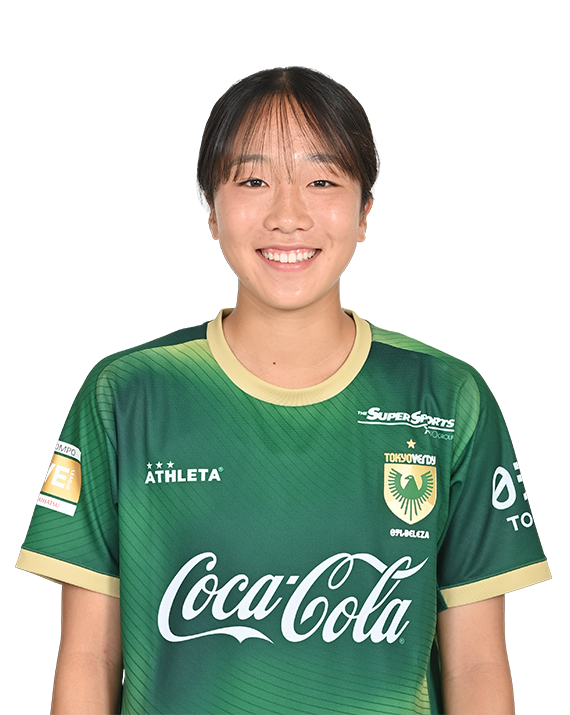
I once found something very strange. It was when the number of players per grade level in Menina, the youth development organization for Beleza, was drastically reduced.
From the first year of junior high school to the third year of high school, the number of players per grade level was reduced to a maximum of three, and in some cases, as few as one.
At first, I thought it was a “business decision of the team,” but seeing the recent growth of Beleza’s young players, I’ve come to think that there might have been another intention behind it.
So far so forth, the major problems in Japanese football player development have been:
(1) Players could only play against opponents of the same age group.
(2) There were too many players in a team of the same age group, resulting in insufficient opportunities for playing time in matches.
The latter has gradually improved as opportunities for league play have increased, and each team, especially school teams, has made efforts to create more tiers (that is, creating lower-ranked teams within the organization in addition to the top team).
However, the former remains unchanged. Especially in official matches where serious competition is required, upper elementary school students played against upper elementary school students, middle school students played against middle school students, and high school students played against high school students.
I now believe that Menina’s system has broken through this barrier.
If Menina were to form a team, they would lack sufficient players if they relied only on high school students or only on middle school students. Inevitably, they would need to select middle school students for the high school team.
A few years ago, when Menina participated in the Empress’s Cup and reached the semi-finals, one first-year middle school student played as a side back. That was Yuna Aoki.
Naturally, there was a significant difference in size between her and the adult players, and she was physically at a disadvantage. However, she fought on equal footing, or even better, with her high level of skill and clever positioning.
It was realized that a first-year junior high school student starting in an official adult match (a very important one, in particular). I was deeply impressed by the realization.
I now believe that this was a positive result of their reorganization of player development system.
Aoki is currently a key player for the adult team Beleza, at the age of 17.
This method, however, carries risks for clubs and schools on the other hand.
For example, in the past cases of boys, players who led the Japanese national team, such as Shunsuke Nakamura, Keisuke Honda, and currently Daichi Kamada, were all eliminated out at the J-League youth academies when they graduated from their middle schools.
In other words, for organizations to succeed in youth development based on a small, elite group approach, clubs and schools need the ability to discern the essential potential of young players.
This is by no means an easy task that just anyone can do.
In fact, Aoba Fujino, the current ace of the Nadeshiko team, was excluded from the high school Menina program (exceptionally she developed herself significantly at another excellent training organization, Jumonji High School, and the Nadeshiko were luckily enough not to lose this brilliant talent).



コメントを残す