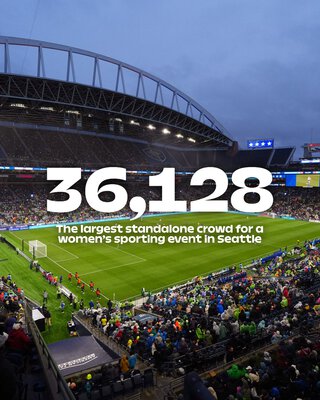
The second match in Seattle attracted a crowd of 36,123 despite being held on a weekday. Courtesy fromthis site.
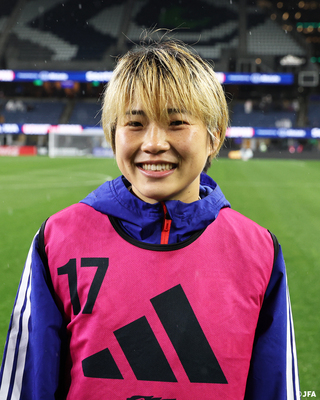
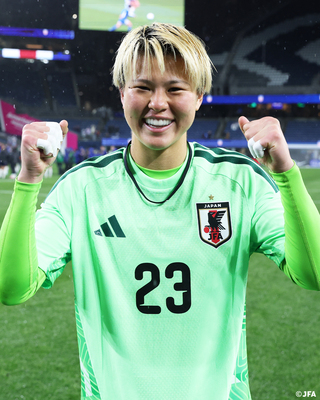
Young players who shone in the second match: Maika Hamano (top), who scored the winning goal, and Akane Okuma (bottom), who kept a clean sheet. Courtesy from this site.
I was looking forward to seeing what kind of match the Nadeshiko could play against the world’s second-ranked USA under substitute manager Kano.
However, I was quite disappointed when I saw the starting lineup for the first match before the kickoff. “This is pointless… is he just throwing the first match away?” I thought.
To beat a strong team like the USA, conceding goals early in the game is fatal. Therefore, we need to line up players with a strong defensive awareness or high defensive skill level to “prevent an early goal from being conceded.”
Furthermore, being constantly pushed back and forced to defend increases the likelihood of conceding goals in the second half when fatigue sets in. This is especially true against the speedy American players. Therefore, it is necessary to field players with strong build-up play abilities.
The starting lineup for the first match clearly did not reflect this.
And the result was two leading goals from the USA. Just as expected.
Former manager Nielsen seemed to have a strategic understanding of these matters and set his starting lineup accordingly, but interim manager Kano appears to have lacked that ability (or perhaps was unable to do so for political reasons?).
Therefore, all we can do is support the individual efforts of each player.
It was also anticipated whether the interim manager could handle the situation skillfully, but it seems he was unable to do so.
In the second match, fortunately, the defense held firm after Hamano scored a spectacular goal. While we need to take into account that the US fielded young players, ending their unbeaten streak is still valuable.
I watched the third match online in its entirety, so I’ll offer some more detailed comments below.
In the first half, a midfielder, who scarcely turned her head around and instead walked halfway through during presses , seemed to be targeted by the opponent, resulting in noticeable ball losses and serious troubles.
(Similar comments (in Japanese) can be found here.)
In the second half, the Nadeshiko conceded a goal from a corner kick. Before that, a ball loss between the opponent’s box and the halfway line led to a counterattack, and although the goalkeeper made a good save, a corner kick was awarded.
Hatton, the 20-year-old American defensive midfielder, is a very good player. Lavelle is also highly skillful.
Both goals conceded came from Fujino’s central dribbling, a failed through pass, and a counterattack. The Nadeshiko were not prepared enough for the mistakes.
The Nadeshiko couldn’t recover from the 0-2 deficit, and the third goal conceded also came from a counterattack and a corner kick.
We need to review the Nadeshiko’s defensive tactics, especially their defense two steps before counterattacks and their corner kick defense.
The 0-3 result reflects the current difference in ability between USA and the Nadeshiko, including the difference in the manager’s competence.
The Nadeshiko must close this gap by next year to win the world title.
Personally, I think former Beleza players Yuzuki Yamamoto and Maya Hijikata could do a little better. I hope they learn how to compete against strong senior opponents.
To offer a slight defense for the Nadeshiko players, it was a tough three-match series with only two days in between, all away from home, so running out of steam at the end was somewhat understandable. However, we must not forget that the US team also faces the same travel conditions.
I hope this defeat will serve as a valuable lesson for the JFA.

コメントを残す